East African Mining News Unearthing Mining Opportunities in East Africa


Related Articles

The end of South Africa’s loadshedding era has not reduced demand for standby power as it has raised the bar for how that power is deployed. Across the African continent, businesses are moving from reactive emergency backup to a more sophisticated, integrated approach to energy resilience and the market is responding accordingly.
Aggreko South Africa’s Country Manager, Louis Botha said the conversation has fundamentally shifted. “After prolonged instability, organisations are less willing to rely solely on the grid. In effect, reduced loadshedding hasn’t reduced demand for standby solutions, it has elevated expectations around how intelligently they are deployed. Generators are no longer seen as isolated assets but as part of a broader, orchestrated energy mix,” explained Botha.
Three structural shifts are reshaping the market. End-users are moving from temporary to semi-permanent solutions, deploying modular systems for extended periods particularly where grid expansion lags economic growth. Pure diesel solutions are being complemented or replaced by hybrid systems incorporating renewables and storage. And adoption is broadening across manufacturing, data centre support and utilities.
The regional picture is nuanced as Southern Africa’s demand is driven by the legacy of grid instability and energy transition commitments. West Africa, particularly Nigeria and Ghana, is responding to chronic grid constraints and strong industrial demand. East African countries such as Kenya and Tanzania are being pulled by rapid economic growth and renewable integration ambitions, whilst Francophone Africa’s market is shaped by accelerating infrastructure investment and electrification needs.
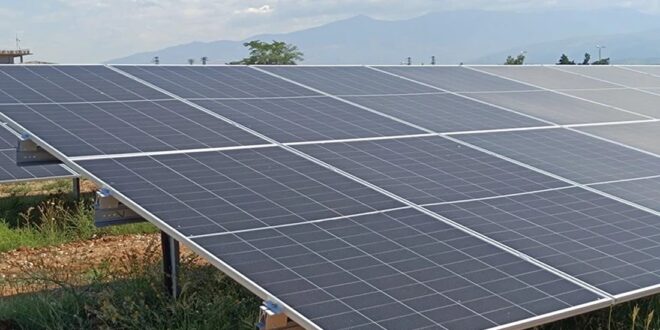
Solar-plus-storage has moved from early adoption to broad commercial acceptance in South Africa and is gaining traction across the continent where diesel costs are high, solar irradiance is strong and grid reliability is inconsistent. A typical deployment combines solar PV as the primary source, battery storage for smoothing and peak shaving and thermal generation as backup, a modular, site-specific model that balances reliability with emissions reduction.
Gas and dual-fuel solutions are also gaining ground, though the transition is uneven. Where pipeline infrastructure is absent, liquefied petroleum gas is playing a practical bridging role, whilst biogas and dual-fuel systems offer operators the flexibility to switch between fuels as availability and cost dynamics shift. “Overall, the market is moving towards ‘energy-as-a-service’ models, where flexibility, reliability and emissions reduction are equally important,” concluded Botha.