East African Mining News Unearthing Mining Opportunities in East Africa


Related Articles

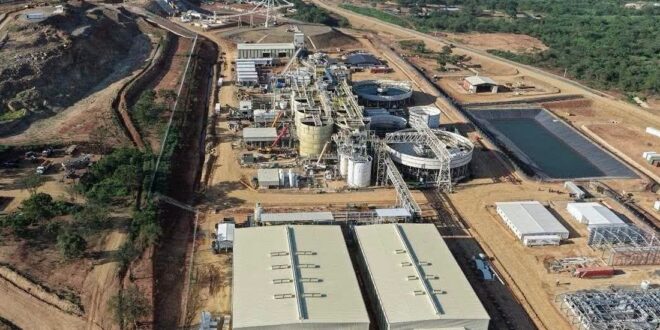
Even as first ore nears the grinding circuit at its Kurmuk mine in western Ethiopia, TSX listed Allied Gold Corporation is looking past opening day. With first gold expected shortly after commissioning, the company says its focus is already on extending mine life and finding richer ore zones within a gold camp that measures 30 km by 50 km.
The plan for Kurmuk is a conventional open pit and agitated leaching operation, producing at least 240 000 ounces of gold a year over the life of the mine and averaging about 300 000 ounces a year in the first four years. Proven and probable reserves, the part of a deposit that can be mined economically, stand at 2.7 million ounces.
Exploration has focused first on extending the two initial pits, Ashashire and Dish Mountain, and on nearby targets that could become extra mining areas. This year’s drilling has extended the mineralised zones along their slope and their length at both pits, confirming the potential to expand reserves. The Dish Mountain deposit, which measures 1 600 m by 500 m, remains open at depth and sideways, meaning drilling has yet to find its edges. At Ashashire the company reports 13.86 m at 10.07 g/t gold, or grams of gold per tonne of rock, with higher grade mineralisation running about 750 m along strike below the current pit limits. That deposit is also open, offering scope for pit expansions and for an underground resource.
The biggest prize may lie further out. The 9 km Tsenge Trend is far longer than either pit and is emerging as a significant growth opportunity, with multiple high grade discoveries. Resource modelling is most advanced at Hiccup Hill, while positive results at Kiftet, Setota and Bumblebee point to more high grade zones. An initial mineral resource estimate for Kiftet and Hiccup Hill is expected by the first half of 2027. The logic is straightforward. Kurmuk starts by mining the richest phases at Ashashire and Dish Mountain, which drives higher production early on, and the new zones are meant to sustain that production for longer and support a long term profile of 300 000 ounces a year.
Further afield, the company has had encouraging high grade results at Urchin and the Western Prospects, and plans to advance large, underexplored gold anomalies at Agu, Ahushu and Dul Mountain progressively from late this year, starting with an initial field review in October. Allied Gold says deposits found within trucking distance of the processing plant could add mill feed and extend mine life.
The drilling effort is substantial. Since October 2025 the company has completed 149 holes totalling 28 003 m, and gold mineralisation needing follow up has been intersected at every target drilled, namely Ashashire, Dish Mountain, Tsenge, Urchin and the Western prospects. Scout and infill drilling along Tsenge is likely to run into 2027 and induced polarisation surveys, which image rock up to 400 m below surface, are due to start late this year along Tsenge and over parts of Ashashire. Follow up drilling at Urchin and trenching and drilling at the Western Prospects are proposed for 2027.
The destination is spelled out in the company’s November 2025 exploration update. Allied Gold’s five year objectives include growing mineral resources to more than five million ounces and extending mine life beyond 15 years, and it says the results so far and the planned work show progress toward both.