East African Mining News Unearthing Mining Opportunities in East Africa


Related Articles


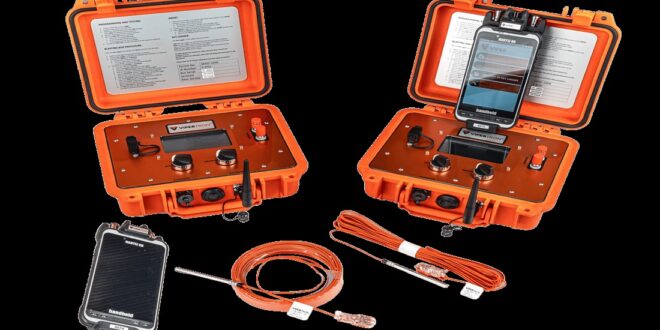
The mining sector’s shift from non-electric blasting systems toward electronic initiation has been widely acknowledged as beneficial, yet adoption across the industry has consistently lagged expectations. BME is now looking to close that gap with the release of its new VIPERTRON electronic initiation system, a product designed less around proving the technology’s merits, which are already well established, than around removing the practical barriers that have kept many mines from switching.
BME’s Managing Director, Ralf Hennecke frames the slow uptake as a rational response to real constraints rather than industry inertia. Electronic initiation systems have consistently outperformed traditional alternatives on accuracy, safety and blast performance, yet capital limitations, skills shortages and operational pressure have made the transition feel costly and complex for many operators, particularly those already achieving acceptable results with the systems they know. “The reasons are well understood. Many mining operations continue to face capital constraints, skills shortages and operational pressures that make the transition to electronic initiation appear costly and complex,” explained Hennecke.
That perceived risk of disruption, more than any doubt about performance, is what BME set out to address in developing VIPERTRON. He said, “Our intent is clear and deliberate: to make electronic initiation technology universally accessible in the mining sector. VIPERTRON® delivers this in a manner that not only enhances safety, sustainability and economic viability, but is also operationally intuitive.” The limitations of traditional non-electronic systems are, by now, familiar to most operators. Variability in blast consistency and fragmentation ripples through downstream operations, shaping loading efficiency, crushing performance, energy consumption and ultimately mine economics. BME’s argument is that this variability represents an ongoing cost that mines absorb quietly, one that electronic initiation is specifically engineered to reduce.
BME’s General Manager of Technology and Marketing, Nishen Hariparsad, made the case that electronic initiation has outgrown its positioning as a premium option reserved for large, highly mechanised operations. “Rather, we are convinced that this technology should become an accessible industry standard capable of delivering measurable value across mines of all sizes,” said Hariparsad. The technical case for electronic systems rests on timing precision. Programmable delays allow far greater control over burden relief, rock movement and fragmentation than traditional shock tube systems can offer, giving blast engineers a level of design control that non-electric systems simply cannot match.
For BME, the real obstacle has never been the technology’s case for itself, but the practical cost of change. He argued, “The challenge in the mining sector has never been proving the technical advantages of electronic initiation. The greater obstacle has been justifying the investment and managing the operational transition. This is precisely the gap that VIPERTRON® has been engineered to address.”
VIPERTRON was built accordingly, with BME simplifying system architecture and workflows while concentrating on the capabilities that generate the greatest operational value. Despite that simplification, the system retains the performance characteristics that define modern electronic initiation. “While accessibility has been a major design objective, VIPERTRON® retains the technical advantages that define modern electronic initiation. This includes exceptional timing accuracy, with a coefficient of variance of approximately 0,02%, enabling highly consistent blast execution and improved vibration control,” noted Hariparsad.
Beyond timing precision, the system supports burden relief based blast design and includes comprehensive diagnostics and system integrity testing ahead of blasting, reducing the likelihood of misfires and improving confidence in execution. Dual communication channels and high immunity characteristics add a further layer of operational safety in demanding conditions. “The result is an electronic initiation solution designed to lower adoption barriers without compromising performance,” said Hariparsad.
Cost has historically been the single biggest deterrent to wider adoption, and BME designed VIPERTRON with that reality in mind from the outset. He added, “By optimising system design and focusing on the functionality that matters most to mining operations, BME aims to enable mines to transition to electronic initiation without introducing a significant step change in operational costs.” Perhaps the more distinctive element of BME’s strategy is how deliberately VIPERTRON has been positioned as a bridge for operators already experienced in shock tube and traditional systems, rather than a wholesale technology replacement. Its bench practice and operational workflows have been aligned closely with existing NONEL practices, easing the retraining burden that typically accompanies a switch in blasting technology.
“Many mines hesitate to introduce new technologies because of concerns around retraining of personnel, disrupting established blasting practices or introducing unnecessary operational complexity. VIPERTRON has been specifically designed as a practical bridge, so operations can adopt electronic initiation through intuitive workflows, straightforward system logic and minimal additional training requirements,” explained Hariparsad.
The practical effect, BME argues, is that mines can upgrade their initiation technology and move to an advanced electronic system without destabilising existing operations, preserving productivity while improving blasting outcomes in the process. “This launch supports the mining sector’s commercial objectives alongside industry wide improvement, aligning with the Omnia vision of innovating to enhance life, and together creating a greener future. As a technology partner in mining, BME is committed to making electronic initiation the industry norm, not the privilege of the few,” concluded Hariparsad.