East African Mining News Unearthing Mining Opportunities in East Africa


Related Articles


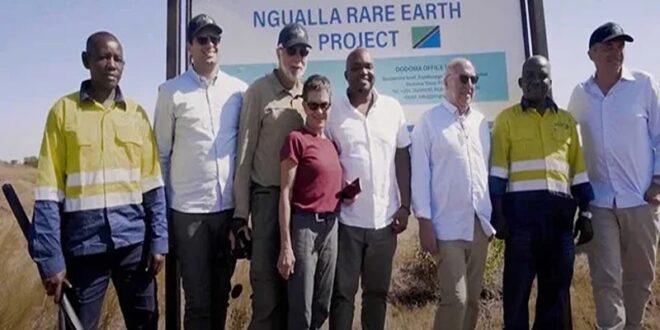
The Tanzanian mining landscape, historically defined by its rich yields of gold and gemstones, is poised for a transformative shift as the global transition toward a green economy intensifies. At the heart of this industrial pivot is the Ngualla rare earth project, an ambitious venture by Australian-listed Peak Resources that seeks to position the East African nation as a pivotal player in the international battery and renewable energy supply chain. By tapping into one of the world’s most significant undeveloped deposits of praseodymium and neodymium (NdPr), the project arrives at a critical juncture where the demand for high-performance magnets is outstripping traditional supply capabilities.
Bardin Davis, the managing director of Peak Resources, has highlighted the strategic importance of the Ngualla deposit, noting its status as a premier mineral resource base. The project is engineered to be a low-cost, fully integrated operation designed to produce approximately 32,000 tonnes of concentrate annually at a 45 percent grade. With ore reserves currently representing less than 10 per cent of the total mineral base, the site boasts a rare earth oxide grade of 4.8 per cent. This robust profile supports an initial mine life of 26 years, providing a substantial runway for future expansion and ensuring the project remains a long-term fixture in Tanzania’s economic portfolio.
From a technical perspective, the Ngualla project benefits from a weathered carbonatite host rock containing advanced bastnaesite. This geological profile is particularly advantageous as it features low levels of acid-consuming elements and radionuclides, such as thorium and uranium. Consequently, the refining process is expected to be more efficient and environmentally sound, reducing the necessity for intensive chemical consumption. Such efficiencies are vital for Peak Resources to meet its objective of becoming a globally competitive, sustainable producer of the materials essential for the 21st-century energy transition.
The economic impetus for the project is underscored by the soaring valuation of the NdPr market, which accounts for roughly 85 percent of the total value of rare earth demand. While the global market for these oxides was valued at approximately $6 billion in 2021, projections suggest this figure will double to more than $12 billion by 2030. This growth is being driven primarily by the automotive sector’s pivot to electric vehicles and the expansion of direct-drive wind turbines. As major economies set aggressive deadlines for banning internal combustion engines, the resulting surge in electric vehicle sales which grew by 43 per cent in 2020 alone has cemented rare earths as the “new oil” of the decarbonised era.
Beyond the balance sheet, the Ngualla project represents a strategic diversification of a supply chain currently dominated by China, which controls nearly 90 per cent of global NdPr production. Recent geopolitical shifts and the supply chain fragilities exposed by the pandemic have prompted Western governments, including the United States and the European Union, to seek alternative mineral sources. As world leaders like Joe Biden and Ursula von der Leyen advocate for supply chain resilience, Tanzania stands to benefit from this global push for diversification, provided it can offer a stable and attractive environment for foreign capital.
The path to production has not been without its hurdles, as the project currently awaits the issuance of a Special Mining Licence. Delays have historically stemmed from legislative overhauls and past disputes between the Tanzanian government and major gold producers. However, the recent resolution of these conflicts and a renewed sense of cooperation have signalled a thawing of relations between the state and international investors. The government appears increasingly focused on balancing national economic sovereignty with the practical requirements of the foreign mining companies necessary to unlock the country’s vast mineral potential.
“This is an exciting moment for the Tanzanian mining industry,” said Bardin Davis, general manager of Peak Resources. “The Ngualla project will bring multi-generation benefits to the community and people of Tanzania, while providing substantial returns for shareholders and supporting the global move toward a zero-carbon future.”