East African Mining News Unearthing Mining Opportunities in East Africa


Related Articles
The Kenyan government has officially invited international bids for the development of the Mrima Hill mineral deposit in Kwale County, an asset currently valued at approximately $62.4 billion. This move marks a significant escalation in Kenya’s efforts to position itself as a key player in the global critical minerals market, specifically regarding niobium and rare earth elements. These minerals are indispensable for the production of high-tech electronics, renewable energy infrastructure, and advanced military hardware. By opening this tender, Kenya is effectively stepping into the middle of a strategic tug-of-war between the United States and China, both of which have expressed keen interest in securing supply chains that are not dependent on traditional monopolies.
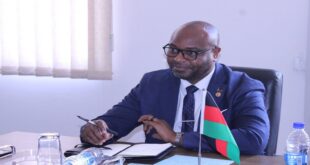
As Mining Cabinet Secretary Ali Hassan Joho noted in the official gazette notice, “This data and the resulting grids serve as primary geophysical information for the winning bidder to conduct detailed exploration in the area.” His statement underscores the transition from theoretical potential to active commercialisation, following a comprehensive nationwide airborne geophysical survey completed in 2022. While the full economic viability of the site is still being determined, the identified presence of niobium, yttrium, thorium, strontium, and lanthanum makes Mrima Hill one of the most promising unexploited mineral sites on the continent.
The tender process is designed to move away from the traditional “extract and export” model that has historically seen African wealth shipped overseas with minimal local benefit. The Kenyan government is now demanding that any successful firm demonstrate not only technical and financial prowess but also a robust plan for local beneficiation and refining. This shift reflects a broader continental trend where nations like Zimbabwe and the Democratic Republic of Congo are tightening mining regulations to ensure that value-addition happens within their own borders. Investors are now required to navigate a landscape that prioritises sustainability, community engagement, and state participation.
Ultimately, the development of Mrima Hill represents more than just a mining project; it is a test of Kenya’s diplomatic and economic leverage. While American officials have advocated for a partnership focused on local processing, China remains the dominant global force in rare earth refining, controlling nearly 90% of the market. By opening a transparent bidding process, Kenya aims to secure the best possible terms for its economy while navigating the complexities of modern geopolitical rivalry. The outcome will likely set a precedent for how other mineral-rich African nations negotiate with global powers in the race for the resources that will power the next century.