East African Mining News Unearthing Mining Opportunities in East Africa


Related Articles
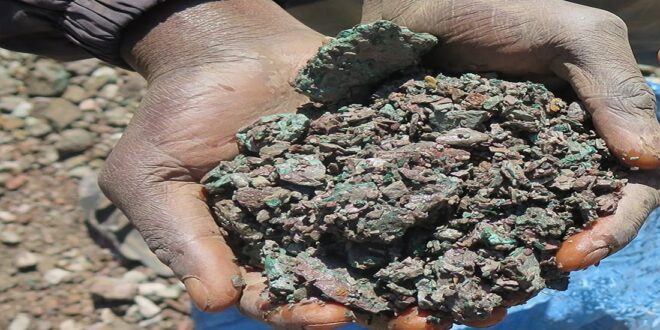
The Democratic Republic of Congo has marked what officials call a turning point for the global battery industry after the state cobalt company produced its first 1,000 tonnes of traceable artisanal cobalt. The move represents a deliberate shift towards a more transparent and regulated supply chain in a country that dominates the world’s cobalt reserves and relies heavily on artisanal mining for employment and income.
Artisanal miners contribute nearly three quarters of Congo’s cobalt output, supporting millions of households. Yet the lack of oversight has long allowed uncertainty and ethical concerns to cloud supply chains, limiting access to responsibly sourced material and driving up prices. Seeking to stabilise the market and encourage domestic processing, authorities introduced export quotas in October, making it less appealing for producers to ship raw cobalt abroad.
During a ceremony in Kolwezi, the country’s cobalt stronghold, Entreprise Générale du Cobalt confirmed the first delivery of traceable artisanal output. The company’s model is designed to clean up production practices and align the sector with international environmental and labour standards. The company’s Chief Executive Officer Eric Kalala said the aim was to elevate artisanal cobalt from an unregulated commodity to a strategically managed national asset.
As demand for cobalt is expected to climb by 40% by 2030, electric vehicle and electronics manufacturers are demanding clearer proof of ethical sourcing. Congo hopes that scaling up traceable production, expanding refining capacity and capturing a larger share of artisanal output will position the country as a dependable supplier to the world’s clean-energy industries. EGC has not yet disclosed how the inaugural batch will be marketed.