East African Mining News Unearthing Mining Opportunities in East Africa



Related Articles


The narrative driving East Africa’s technology sector is undergoing a fundamental transformation. What began as a story about mobile connectivity and grassroots innovation is rapidly pivoting toward compute power the raw processing capabilities, networking, and memory infrastructure required to anchor the next generation of complex digital economies.
To unlock this next chapter, countries across the region are facing an expensive race to expand baseline power grids, secure water infrastructure for cooling, and lay heavy-duty physical architecture for data centers and redundant systems. Experts increasingly view East Africa’s digital trajectory through a hub-and-spoke model. Kenya sits at the absolute center of this web, serving as the primary digital gateway connecting the emerging nodes of Tanzania, Uganda, Rwanda, and Ethiopia.
Kenya’s dominance stems from a mature financial technology landscape pioneered by the explosive growth of M-Pesa. This fintech boom has catalyzed the broader information and communications technology (ICT) market. According to data from the Communications Authority of Kenya, mobile penetration hit an astonishing 149.5% at the end of late 2025. This figure is heavily inflated by a hyper-competitive consumer market where individuals commonly juggle multiple SIM cards retaining their primary mobile money accounts on one network while swapping secondary SIMs to hunt for cheaper voice and data packages.
The Clean Energy Premium
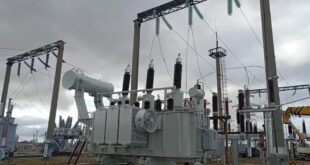
The foundation of Kenya’s digital infrastructure is anchored by eight operational subsea cables, with several more currently under negotiation. Crucially, the country offers a unique asset for global enterprise tech companies facing intense pressure to reduce carbon emissions: a green power grid. International Energy Agency data shows Kenya sourced nearly 90% of its electricity from renewable generation.
This green profile has ignited major localized investment, including active plans to build a dedicated, sustainable data center hub in Naivasha, tapped directly into the Olkaria geothermal fields.
However, the power landscape carries historical scars. Investors are still navigating the fallout of a previous state utility moratorium on power purchase agreements, which left a wave of advanced, independent power projects stranded without institutional buyers. Yet, this bottleneck has generated unintended silver linings for tech infrastructure.
“The grid bottleneck has actually opened up fascinating secondary plays for the sector,” says an infrastructure investment analyst tracking the region. “We are seeing operators bypass traditional grid delays entirely by co-locating data centers directly inside power plants or deploying containerized edge facilities right at private generation sites.”
A Tale of Two Regulatory Paths
As capital flows toward regional infrastructure, East Africa’s two largest economies are diverging sharply on how to govern it.
Kenya’s regulators have moved aggressively, introducing multifaceted frameworks that have received mixed reviews from international investors. In a bid to provide guidance, the government chose to classify data centers as active network service providers. This means facilities are regulated as active electronic and data-processing infrastructure rather than passive, physical real estate. Coupled with the introduction of a sweeping Artificial Intelligence Bill targeting governance, privacy, and safety, operators now face highly complex, overlapping compliance streams.
The aggressive legislative push has triggered an uncomfortable debate within Nairobi’s tech circles. Critics question whether Kenya is regulating “too much, too soon,” imposing stringent bureaucratic guardrails while foundational issues like energy security and physical data center capacity remain deeply fractured.
In stark contrast, neighboring Tanzania is betting on a philosophy of regulatory simplicity. Recent technical mandates issued by the Tanzania Communications Regulatory Authority strictly mirror international standards with minimal local customization, offering a highly predictable playbook for foreign capital.
Tanzania’s primary compliance hurdle remains its 2023 Personal Data Protection Act, which enforces strict data sovereignty laws requiring the localized storage and processing of its citizens’ data. Backed by a robust banking sector and its own expanding renewable energy capacity, Tanzania is rapidly positioning itself as a friction-free alternative for data infrastructure deployment.
The Frontier Nodes
Beyond the two primary markets, the rest of the region presents a fragmented but high-potential landscape:
- Ethiopia: Offers immense macroeconomic scale due to its massive population, though it continues to present steep operational and regulatory entry barriers for early-stage investors.
- Uganda: Continues to carve out a steady niche as a smaller, highly competitive market, bolstered by a progressive, carrier-neutral colocation policy that fosters open infrastructure sharing.
- Rwanda: Defies its strict geographic and population limitations by leveraging a highly aggressive, policy-forward environment explicitly designed to court institutional tech investment.
Navigating Local Friction
Despite the macroeconomic tailwinds, building out East African compute power demands a harsh acknowledgment of local operational realities. Traditional infrastructure risks like energy transmission bottlenecks and acute water scarcity are persistent threats to data center cooling loops.
Furthermore, operators in Kenya face the costly, under-reported challenge of infrastructure vandalism. The threat forces tech firms to reallocate major capital toward heavy physical security, constant surveillance, and active coordination with local law enforcement agencies.
For international financiers, the ultimate test lies in market scaling. Building massive capacity too far ahead of actual enterprise demand can easily backfire, particularly in the region’s smaller economies. As regional developments compete for global capital against markets offering larger subsidies or more seamless business climates, the path forward requires an aggregated view.
In East Africa, tech success is no longer a single-country play. Winning the market requires a unified, multi-country strategy one anchored firmly in the green grid of Kenya and distributed outward through the emerging digital nodes surrounding it.