East African Mining News Unearthing Mining Opportunities in East Africa


Related Articles

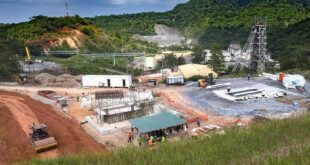
Canadian miner Allied Gold Corporation has poured its first gold at the Kurmuk Gold Mine in western Ethiopia, moving the site from a greenfield development project to an operating mine. The company announced the initial pour on 9 November 2026 and described it as a major step for what will be its newest producing asset and its lowest cost operation. Management and the board praised the development and operations teams, highlighted the joint efforts of local and international staff and recognised government officials for their support.
Kurmuk is among the first large scale mechanised mines in Ethiopia and a crucial test for the country’s ambition to build a modern mining industry. Located in the Benishangul-Gumuz region near the Sudanese border, it is widely watched as a bellwether for foreign direct investment in Ethiopian mining. Allied Gold consolidated its ownership of the project to 93% in September 2023 and its subsidiary Kurmuk Gold Mine PLC secured a 20 year power purchase agreement with Ethiopian Electric Power in August 2024 to supply hydroelectric power. The deposit sits within the highly prospective Arabian Nubian Shield.
The company is now preparing to scale up toward full commercial operations. It expects to complete final power infrastructure installations in November 2026 and to fully mobilise its haulage fleet, with commercial production targeted by the end of 2026 and designed operating capacity expected in early 2027, as recovery rates improve steadily through year end. Kurmuk is targeting 25,000 to 35,000 ounces of gold in 2026, rising to 55,000 to 65,000 ounces in the first quarter of 2027 and 240,000 to 270,000 ounces for the full year. Annual output is projected to reach 300,000 ounces by 2028, averaging 300,000 ounces over the first four years and 240,000 ounces a year over the life of the mine, while near surface drilling continues at Ashashire, Dish Mountain and the Tsenge Trend to extend mine life.
Across its portfolio, Allied Gold projects consolidated production of 400,000 to 435,000 ounces in 2026, rising to 615,000 to 670,000 ounces in 2027, which is 54% above the 2026 midpoint. Beyond 2027, the producer aims to reach 800,000 ounces a year by 2029, helped by an expansion at its Sadiola mine in Mali.