East African Mining News Unearthing Mining Opportunities in East Africa


Related Articles

The Lobito Corridor is emerging as one of Africa’s most strategically important pieces of mineral infrastructure as global powers and investors compete to secure access to the copper and cobalt needed to drive the energy transition. The United States (U.S) is preparing to put up to $1 billion behind the rehabilitation and operation of the Democratic Republic of Congo’s (DRC) section of the corridor, deepening Washington’s economic engagement with one of the world’s most important sources of critical minerals.
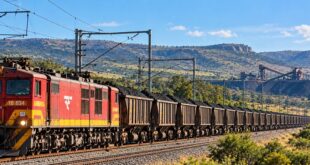
The proposed financing would support a 30 year concession covering the Congolese section of the railway, which links the DRC’s mineral-rich southern provinces with Angola’s Atlantic coast and international markets. Portugal’s Mota-Engil is expected to sign the concession agreement and take control of the railway section, according to Bloomberg. The company already operates part of the Lobito Corridor in Angola through a joint venture with commodities trader Trafigura, giving it an established presence along the strategic route. The US International Development Finance Corporation (DFC) signed a letter of interest with Mota-Engil in December for financing of up to $1 billion to support the rehabilitation and operation of the Congolese railway. The investment signals a significant shift in the critical minerals race. Access to mineral deposits remains important but control over the infrastructure that moves those minerals from mine to market is becoming an equally strategic consideration.
The roughly 1,000 kilometre railway connects major mining centres including Kolwezi, Tenke and Lubumbashi to the wider Lobito Corridor, providing an alternative export route to the Indian Ocean corridors traditionally used to move minerals from the DRC and Zambia. The railway offers DRC a direct connection from its copper and cobalt-producing heartland to the Atlantic port of Lobito in Angola. For international buyers, it creates an additional logistics pathway for accessing minerals without relying exclusively on supply chains with strong Chinese participation. The strategic significance of the route is underpinned by the DRC’s dominant position in global cobalt production and its status as the world’s second-largest copper producer. Both minerals are essential to electric vehicles, renewable energy infrastructure, power networks, energy storage and a range of advanced technologies. China, however, remains deeply embedded in the DRC’s mining and processing ecosystem, controlling significant portions of copper and cobalt production and refining capacity.
That has made diversification of mineral supply chains a growing priority for Washington and its partners, particularly as governments seek to reduce exposure to concentrated sources of critical minerals. The Lobito Corridor has consequently evolved from a transport project into a strategic economic asset, linking African mineral resources with global manufacturing and technology supply chains. Its importance is also being reinforced by competing infrastructure investment elsewhere in the region. China is pursuing a separate $1.4 billion rehabilitation of the Tanzania-Zambia Railway or TAZARA, which connects Zambia’s copper belt with the Indian Ocean port of Dar es Salaam. The competing projects highlight how railways and ports are becoming instruments of economic influence as much as conventional infrastructure. Whoever provides reliable and competitive routes to market can exert greater influence over the movement of strategic commodities and the development of the industries built around them.
For African producers, the intensifying investment could provide tangible benefits. Improved rail capacity can lower logistics costs, reduce dependence on road transport and strengthen access to international markets, potentially making mineral projects more competitive. The Lobito Corridor also creates an opportunity to capture greater economic value from regional mineral flows by strengthening the connection between inland mining operations and Atlantic export infrastructure. The challenge will be translating international strategic interest into long-term infrastructure that delivers commercial value for the countries through which the corridor passes.
The potential US commitment of up to $1 billion places the Lobito Corridor firmly at the intersection of mining, infrastructure and geopolitics. As demand for copper and cobalt grows, the race is increasingly extending beyond ownership of the minerals themselves to the railways, ports and corridors that determine how efficiently they reach global markets. Lobito is therefore becoming more than an export route. It is emerging as a strategic gateway through which Africa’s critical-mineral wealth could increasingly connect with the global economy.