 East African Mining News Unearthing Mining Opportunities in East Africa


Related Articles

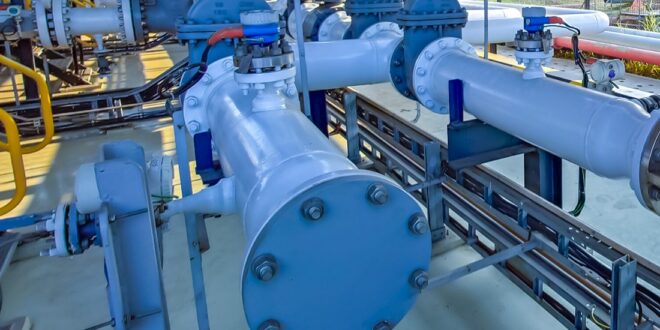
Companhia do Pipeline Moçambique-Zimbabwe (CPMZ), Lda. is moving to expand one of Southern Africa’s strategic fuel supply routes, with a major capacity upgrade of the Beira-Harare corridor set to increase the volume of petroleum products transported into regional markets.
CPMZ will break ground on 2 September 2026 in Nhamatanda, Sofala Province, for Phase II of its pipeline capacity expansion, a project that will add two new pumping stations and increase the annual transport capacity of the Beira-Feruka pipeline from 3 million to 5 million cubic metres by the end of 2027. The 67% capacity increase comes as demand for diesel, petrol and jet fuel continues to grow across Southern Africa, while landlocked economies remain heavily dependent on efficient import corridors to secure reliable energy supplies.
The new pumping stations will be constructed in Nhamatanda and Messica in Manica Province, strengthening the pipeline’s ability to move fuel from the Port of Beira into Zimbabwe and onward to markets across the Southern African Development Community (SADC). The significance of the expansion extends beyond the Mozambique-Zimbabwe border. The Beira-Harare corridor provides an important supply route into landlocked markets including Zambia, Malawi, Botswana and the Democratic Republic of Congo, positioning the infrastructure as a critical component of the region’s broader fuel logistics network.
The groundbreaking ceremony is expected to be attended by the Heads of State of Mozambique and Zimbabwe, underscoring the strategic importance of the infrastructure and the bilateral partnership supporting the development of the corridor. The investment also forms part of a broader effort to align capacity across the Beira-Harare fuel route. CPMZ’s pipeline expansion is being synchronised with the upgrade of the Petrozim Line between Feruka and Harare, creating a more integrated, higher-capacity energy corridor between the Port of Beira and Zimbabwe’s interior.
In the regional markets, the value of that integration lies in the ability to move larger volumes of fuel more efficiently and reliably from the coast to inland demand centres. Harare’s position as a distribution hub gives the corridor strategic importance in supplying both the domestic market and neighbouring landlocked economies. CPMZ’s latest expansion builds on the company’s 2024 capacity upgrade, which increased annual pipeline capacity from 2 million to 3 million cubic metres. The next phase will add a further 2 million cubic metres of annual capacity without requiring an interruption to daily pipeline operations or fuel supplies to regional markets.
That continuity will be critical as CPMZ undertakes construction and commissioning of the new pumping infrastructure while maintaining the corridor’s role as an active regional fuel artery. The 294 kilometre Beira-Feruka pipeline is a key component of the wider Beira Corridor, linking the Port of Beira with Zimbabwe and the Southern African hinterland. Its strategic relevance is expected to grow as regional economies pursue greater supply-chain resilience, improved trade connectivity and more dependable access to energy.
CPMZ and the Government of Zimbabwe share a longer-term vision of establishing the Beira-Harare axis as one of Southern Africa’s leading energy supply routes, with further investment potentially extending its reach into new markets. Longer-term planning includes studies into replacing the existing pipeline with a larger-diameter line capable of meeting projected regional fuel demand through 2050. A potential extension of the Harare-Lusaka axis into Zambia’s Copperbelt is also under consideration, which could further integrate the corridor with one of the region’s major industrial and mining centres.
Such expansion would strengthen the strategic role of the Beira Corridor by connecting coastal import infrastructure with some of Southern Africa’s most important inland markets, while creating greater capacity to support industrialisation, trade and economic growth. The investment in Mozambique reinforces the Port of Beira’s role as a gateway into the regional economy. For Zimbabwe and other landlocked SADC markets, it strengthens an established supply route at a time when reliable and cost-efficient fuel logistics are increasingly central to economic competitiveness.
Established in 1982, CPMZ operates under a public-private governance model bringing together the Mozambican State and private investors. The company operates continuously, 24 hours a day and 365 days a year, supported by an expert technical workforce composed entirely of Mozambican professionals. Its operations are supported by advanced telemetry and real-time SCADA monitoring, alongside rigorous safety and environmental standards designed to protect the integrity and reliability of the pipeline system.
With Phase II set to lift annual capacity to 5 million cubic metres, CPMZ is positioning the Beira-Harare route for a larger role in Southern Africa’s energy architecture. The expansion is therefore more than an increase in pipeline throughput. It is an investment in the capacity, resilience and connectivity of a regional fuel network increasingly vital to the movement of goods, people and economic activity across SADC.

